
Resume Alternatives: Ways to Present Yourself Beyond a PDF
Looking beyond the one-page PDF? An honest guide to resume alternatives — LinkedIn, portfolios, personal sites, video, and interactive profiles — with the tradeoffs of each.
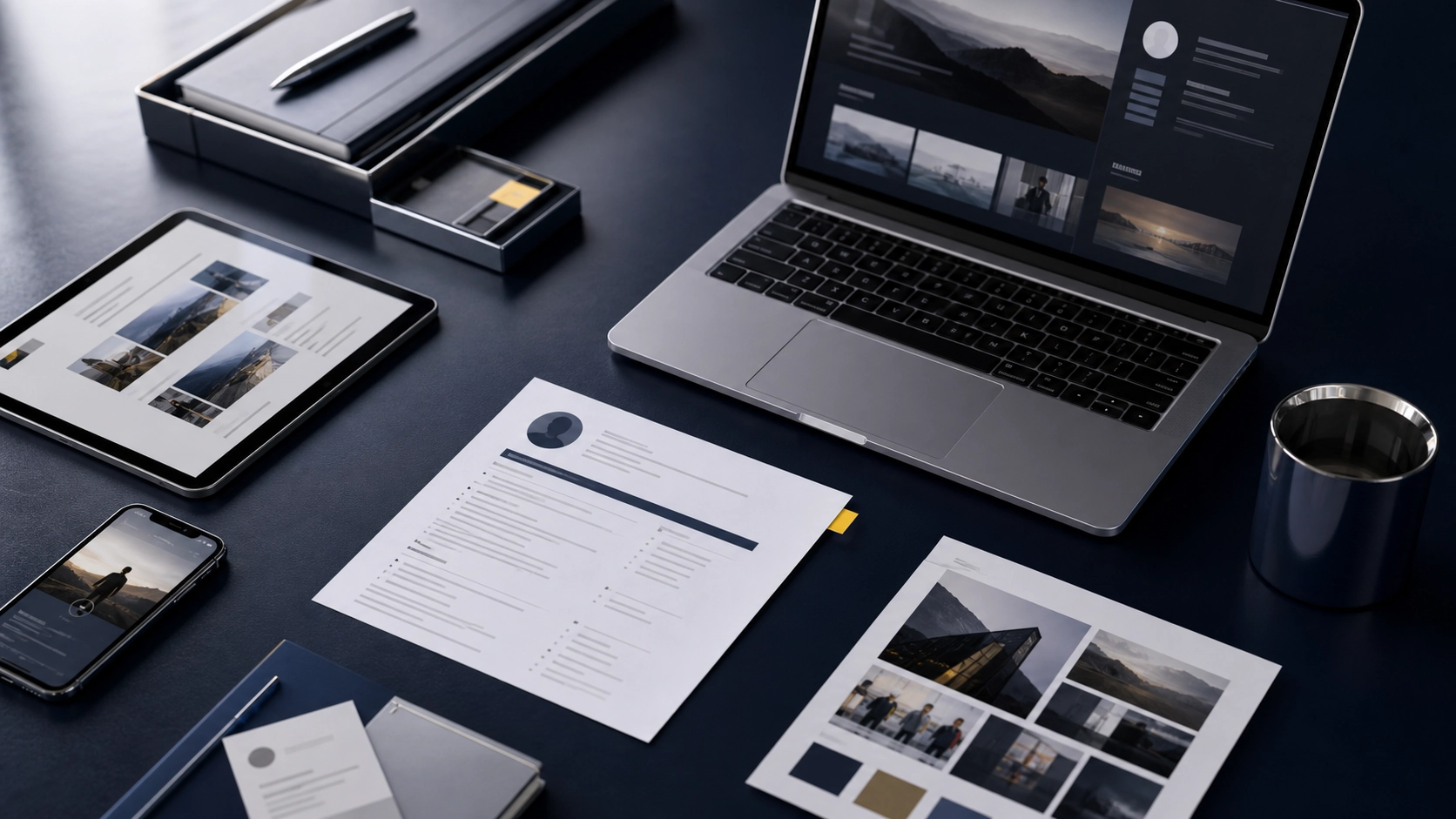
The one-page resume isn't a rule — it's a default. The PDF won because it was easy to scan, easy to standardize, and easy to email, back when fast comparison was the entire job. It's still good at that. But "what's the standard document to submit?" and "what's the best way to show who I am?" are different questions, and if you're looking for alternatives, you've probably watched a resume get passed over one too many times to keep believing they're the same question.
So here's an honest map of what's beyond the PDF — the real formats people use to present themselves, what each one actually proves, what it costs you to build, and who it's right for. Almost all of them come down to a single tradeoff: the easier a format is to make, the thinner the picture it paints; the richer the picture, the more work it takes. The whole game is knowing which tradeoff is worth it for you.
Is LinkedIn a good resume alternative?
LinkedIn is the default alternative, and recruiters will look whether you point them to it or not. It's free, low-effort, and carries social proof and a fuller history than a resume has room for. But it sits in the same tradeoff as the resume itself: easy to maintain, universally readable, and largely flattening. It gives you more room than a resume, but you're still poured into the same template as every other candidate, you don't fully control the presentation, and the parts that matter get buried under work anniversaries and "open to work" banners. Keep it sharp — but treat it as table stakes, not the thing that sets you apart.
Should you use a portfolio or personal website instead of a resume?
This is where the picture gets richer, and the work gets real.
A portfolio is the most convincing format there is — if your work is visual or tangible. For designers, writers, and developers, it replaces claims with evidence: instead of "led a redesign," a recruiter sees the redesign. The limits are just as clear. It only works if your work is portfolio-able, it takes ongoing effort to keep current, and for sales, ops, finance, or people-management roles there's often nothing to put in one.
A personal website buys you control and a single durable home for everything — resume, work, writing, contact — and building one signals initiative on its own. But it's a genuine project, it can quietly become a vanity exercise, and a site only helps if it makes the payoff obvious fast. Most don't. It's a strong destination to send an already-interested recruiter to, and a weak tool for earning that interest cold. If you're weighing a site against an interactive profile specifically, we compare them head-to-head in personal website vs. interactive career profile.
Should you send a video resume?
A 60-to-90-second video conveys personality and communication style in a way no document can, and it's still uncommon enough to stand out. But it's a production effort, plenty of capable people freeze on camera, and there's no guarantee anyone presses play. For a communication-heavy or customer-facing role, if you're comfortable on video, it's a real edge. For everyone else, it's optional. And it shares the catch that unites everything above it: it still only plays at a recruiter. It can't respond.
What is an interactive career profile?
An interactive career profile is a shareable link that lets a recruiter ask questions about your background and explore the context behind your resume, rather than just read a static document. It's the gap we built Worksona around.
Every option so far forces the same choice — easy but thin, or rich but demanding. An interactive career profile sits between those two poles: richer than a resume, but easier to create than a full portfolio or personal website.
It starts with the resume you already have, then lets you build beyond it without starting from a blank page: the success stories behind the bullet points, the endorsements, the projects, the personality. You get more context than a resume holds, without the work of building a full portfolio — and without needing your work to be visual.
And it does the one thing none of the others can. Where a resume, a site, or a video can only be read or watched, an interactive profile lets a recruiter ask questions and explore the parts they care about. The format isn't just fuller — it can respond to the questions a recruiter actually has, in the exact moment they're deciding whether you're worth a closer look.
The honest comparison
| Format | Effort to build & maintain | What it proves | Best for | Static or interactive |
|---|---|---|---|---|
| Traditional resume | Low | Baseline qualifications and chronology | Everyone (the default) | Static |
| LinkedIn profile | Low | Work history + social proof | Everyone (table stakes) | Static |
| Online portfolio | High | Actual work product (evidence) | Visual or tangible work | Static |
| Personal website | High | Initiative + a curated home | People wanting one durable hub | Static |
| Video resume | Medium–High | Personality & communication | On-camera, comms-heavy roles | Static (one-way) |
| Interactive profile | Low–Medium | Career context, supporting proof, recruiter Q&A | Adding context without building a full portfolio | Interactive |
How to actually choose
None of this means the resume is dead. It means it's one option among several, and the right one depends on you:
- If your work is visual or tangible, build a portfolio and lead with it.
- If you want one durable home to point people toward, a personal site is worth the effort.
- If you're comfortable on camera and the role rewards communication, a short video can stand out.
- If you want more context than a resume without building a full portfolio — in a format a recruiter can actually interact with, not just read — an interactive profile covers the most ground for the least overhead.
And whichever you choose, the resume still rides along. The real question is just what you put next to it.
Frequently asked questions
What are the best alternatives to a traditional resume? A LinkedIn profile, an online portfolio, a personal website, a short video introduction, and an interactive career profile. The right one depends on your field and how much effort you want to spend: portfolios suit visual or tangible work, while an interactive career profile adds context a recruiter can explore or ask about — for any kind of role, without building a full portfolio.
Do I still need a resume? Usually yes. A resume is still the default document most applications expect, so it rarely goes away entirely. The practical question is less "what replaces it" and more "what richer thing you add alongside it."
Is a portfolio better than a resume? For visual, written, or technical work, often yes — it shows evidence instead of claims. But it only helps if your work is portfolio-able, and for many roles (sales, ops, finance, people management) there's little to put in one, which is where other formats fit better.
What is the best resume alternative for non-design roles? For non-design roles like sales, operations, finance, customer success, or people management, the best resume alternative is usually something that explains context rather than shows visual work. A strong case study, a tailored work sample, a personal website, or an interactive career profile can help recruiters understand what you owned, how you made decisions, and what your results actually mean.
Is an interactive career profile the same as a personal website? No. A personal website is usually a static destination someone has to browse. An interactive career profile is built around questions — a recruiter can ask about your experience, projects, strengths, or fit for a role and get answers from the context you've provided. We compare the two head-to-head in personal website vs. interactive career profile.
The bottom line
The resume isn't going anywhere — but it was never the only way to present yourself, and in a stack of similar PDFs it's rarely the most convincing one. The formats that win are the ones that show more of the person without burying the recruiter in work to find it.
If you want something simple to share, richer than a static profile, and able to answer questions using the context you've provided, that's exactly what Worksona was built for. Create your profile and give recruiters the context behind your resume — in a format they can actually explore.


Career insights, straight to your inbox
Occasional, no-spam notes on standing out, the job search, and what we’re building at Worksona.
No spam. Unsubscribe anytime.